Menu

Property Tax Resources

Sep
07

Why Assessors Need to Take a Mulligan

"Assessors prefer the cost approach because the availability of cost data from national valuation services makes the determination of a value rather straightforward.Taxpayers argue that an income approach is better suited to derive the value of a golf course..."

By Andy Raines , Esq., as published by National Real Estate Investor, August 2008

As the old joke goes, the fastest way to become a millionaire as a golf course owner is to start out with $5 million. Unfortunately some property tax assessors don't get the joke. They continue to assess golf courses as if their value is increasing or holding steady.

During the 1990s, the supply of golf courses expanded by 24% while the number of golfers rose by just 7%, according to the National Golf Foundation. What's more, in the first quarter of 2008 there has been a 3.5% drop in rounds played.

Golf course owners now face numerous challenges. Although more courses have closed than opened over the past two years, the oversupply will likely take several years to absorb. Additionally, the soft economy and rising oil prices negatively affect travel to golf courses and course operating costs.

Property assessors have failed to take these factors into account in making their assessments. But golf course owners have begun to fight city hall by filing property tax appeals. If successful, the appeals can result in significant tax savings.

The accompanying chart demonstrates the magnitude of assessment reductions obtained by four different golf courses as a result of their tax appeals. On average, these appeals achieved a 40% reduction.

Why do assessors' valuations of golf courses differ so dramatically from the values contended by taxpayers and, in many instances, adopted by boards of equalization and judges? The assessor and taxpayer each use different valuation approaches that yield different values.

Methodology matters

The generally accepted valuation approaches include the cost, income capitalization, and sales comparison approaches. The appropriate valuation approach depends on various factors:

  • the amount and reliability of the data collected in each approach;the inherent strengths and weaknesses of each approach as it relates to a particular property type;
  • the relevance of each approach to the particular property at issue.

Raines_graph2Assessors typically value golf courses using a cost approach. That approach starts with land value, adds the cost of property improvements, and subtracts physical depreciation. Assessors prefer the cost approach because the availability of cost data from national valuation services makes the determination of a value rather straightforward.

Taxpayers argue that an income approach is better suited to derive the value of a golf course. That approach starts with a determination of revenue and deducts operating expenses to arrive at net operating income. Net operating income is then divided by a capitalization rate, thus yielding the value.

The issue centers on which method of golf course valuation is preferable: the assessor's cost approach, or the taxpayer's income approach?


Courts side with owners

The judges in these cases rejected the assessor's cost approach for several reasons. The cost approach rests on the principle of substitution, but replacement sites are difficult to find in the golf course industry. One judge cited an appraisal industry publication, which concluded that the cost approach is generally inapplicable to golf courses.

The cost approach used by the assessor deducted only the physical depreciation, based on age, but did not factor in external obsolescence. External obsolescence results from outside forces such as the oversupply of courses.

Again, a judge cited the appraisal industry publication that noted the difficulty in estimating external obsolescence in a market where prices have fallen 50% or more since the late 1990s. The judges found that investors rarely use a cost approach to determine the purchase price to pay for a golf course.

The judges held that the income approach offers the best valuation method for a golf course because buyers typically buy courses to produce income. The approach measures this capacity and converts it into a projected sales price.

The assessor's cost approach has been found not to be par for the course, so owners should consult their property tax professional to determine if an income approach can reduce their property tax liability.

RainesPhoto90Andy Raines is a partner in the Memphis law firm of Evans & Petree PC, the Tennessee member of the American Property Tax Counsel (APTC), the national affiliation of property tax attorneys. He can be reached at araines@evanspetree.com.

Continue reading
Jun
07

Industrial Properties Get Their Due

"In most jurisdictions, the taxing authorities include in industrial property tax assessments the value of the real estate and the value of the intangibles, despite the fact that in many states intangibles are not taxable assets..."

By Cris O'Neall, Esq., as published by National Real Estate Investor, June 2008

For over a decade, tax authorities in many jurisdictions have recognized that intangible assets and rights must be removed when assessing certain types of properties for tax purposes. This recognition of non-taxable intangibles has typically been limited to hospitality and retail properties, where intangible assets are easier to pinpoint.

Assessors often believe industrial properties consist of solely taxable real estate and personal property, and don't remove the intangible assets for valuation purposes. That could change, however, in the next few years, due to changes in financial reporting standards made earlier this decade, including the advent of FASB 141 and 142, which address the reporting treatment of intangibles acquired by publicly traded companies.

INDUSTRIAL INTANGIBLES PROVE DIVERSE
New reporting requirements enable industrial property owners to call attention to intangible assets so they can be deducted from property valuations.

table_for_cko_2008_article

Gaining traction

As auditors have learned to apply FASB 141 and 142, the number and types of intangibles reported to regulatory authorities has increased. The above chart provides a few examples of the kinds of data industrial companies have begun to report to the Securities and Exchange Commission following large industrial plant acquisitions.

In each example, a portion of the purchase price paid was allocated to specific intangible assets and rights. For instance, Harvest Energy Trust allocated over $118 million of the price it paid for a refinery in Newfoundland, Canada in 2006 to engineering drawings, marketing contracts and customer lists. In the past, intangibles were usually reported along with property, plant and equipment and not delineated. Thus, assessors could not see the intangible assets much less understand their value. FASB 141 and 142 have changed that. The identification of specific intangible assets by industrial companies in financial reporting of acquisitions represents a big step forward. It gives legitimacy to specific intangibles, both for the company reporting them and for other companies in the same industry. Intangibles are exempted from taxation in a number of states. For example, in California, statutes, regulations and appellate court decisions exempt most industrial plant intangibles.

Property taxpayers who can identify and place a value on intangible assets and rights are entitled to exclude the value of those intangibles in determining their property's assessed value. Similar tax exemptions can be found in other states, such as Texas and Washington.

Doing the math

Once intangibles are identified, the amount of intangible value to be deducted from the property's total value must be determined. This is established by a review of comparable sales or a cash flow analysis. An appraiser should be retained to develop the valuation using the appropriate ad valorem tax standard.

For example, every industrial property has employees and a market expense to recruit and train can be estimated. This figure is an "avoided cost" to a buyer and represents the fair market value of that workforce for ad valorem tax purposes.The same technique can be used to value drawings, manuals and software.

Normally, property owners do not determine the value of intangibles by using the local property tax value standard. By valuing intangibles that way, the taxpayer derives a quantitative value for the tangible real and personal property that should be subject to property tax.

In most jurisdictions, the taxing authorities include in industrial property tax assessments the value of the real estate and the value of the intangibles, despite the fact that in many states intangibles are not taxable assets. Therefore, owners and operators of industrial properties need to follow these key steps:

  • Determine how the taxing authorities appraise your properties for ad valorem tax value. If they include real estate and intangibles in their assessment, take stock of the intangible assets and rights used in connection with your properties.
  • Order appraisals for all the properties' intangibles, basing those appraisals on local ad valorem value standards.
  • Present the facts to the taxing authorities and request that the value of the intangibles be excluded from the taxable value of your properties.

If you and the authorities cannot agree, file a tax appeal.

CONeallCris K. O'Neall is a partner in the Los Angeles law firm of Cahill, Davis & O'Neall LLP, the California member of American Property Tax Counsel (APTC), the national affiliation of property tax attorneys. Mr. O'Neall can be reached at cko@cahilldavis.com.

Continue reading
Feb
08

When the Cost Approach Proves Unfair

Using comparable market sales for taxation can correct errors assessor errors.

"The tax professionals' initial work identified three relatively recent sales of comparable properties that suffered from functional and external obsolescence, much like the taxpayer's property."

By Stewart L. Mandell, Esq., as published by National Real Estate Investor, February 2008

Assessors typically value industrial and commercial properties using a cost approach that starts with land value, adds the cost of property improvements and subtracts some physical depreciation, often based on the property's age. Deducting only the physical depreciation from a property tax valuation often results in egregiously excessive taxation. However, by applying data regarding comparable market sales, taxpayers can remedy this problem, sometimes with extraordinary results.

Seldom are such factors as functional or external obsolescence, which can dramatically diminish property values, used in assessors' property tax valuations. Functional obsolescence arises from the flaws that exist in a property. Examples include an abnormal size, shape, or height, concrete floors that are exceptionally deep or too shallow and so forth.

External obsolescence results from outside forces such as industrial properties becoming vacant because production moves offshore, or a change in tax laws that reduces commercial property values. Fortunately, data from comparable property sale can be used to identify specific amounts of functional and external obsolescence; amounts that must be deducted from assessors' valuations to eliminate unlawfully excessive taxation.

Consider an industrial facility with above market operating expenses that houses manufacturing barely surviving global competition. In an actual case similar to this example, the assessor made a mere 4% reduction for functional and external obsolescence even after the taxpayer had fully described the obsolescence. Ultimately the taxpayer retained property tax professionals who knew how to use sales of comparable properties to demonstrate the diminished values the obsolescence caused.

How the process works

Assessor's records commonly contain errors in a property's age, total square footage, net leasable area, number of units, unit mix, and facility amenities. An error in the property's basic data can significantly increase a property's overall assessment. Providing a current rent roll to the assessor can help correct mistakes in a property's basic data. An owner may also wish to produce a site plan for the property along with the most recent marketing materials that show the project's different floor plans and amenities. Correcting basic errors in the assessor's records remains the simplest path to lower a tax assessment.

The tax professionals' initial work identified three relatively recent sales of comparable properties that suffered from functional and external obsolescence, much like the taxpayer's property. The professionals used these sales to quantify depreciation in a way that enabled them to reasonably estimate the obsolescence in the taxpayer's property. Using the steps followed by the professionals, taxpayers can garner stunning property tax reductions. Here's how:

  • Determine the value of improvements by subtracting the value of the land from its sale price for each of the comparable properties.
  • Determine the construction cost of improvements when new by researching construction costs in national estimating services such as Marshall Valuation.
  • Calculate the property's total depreciation by subtracting the value of the improvements today from the cost to construct the improvements.
  • Ascertain physical depreciation by dividing the property's effective age by its life expectancy.
  • Estimate functional and economic obsolescence by subtracting the physical depreciation from its total depreciation.

The taxpayer's reward

Completing this analysis for the three comparable sales produced an indication of functional and external obsolescence that was far greater than the assessor recognized in his assessment. Having established a 40% to 48% range for obsolescence, the professionals then determined whether any further adjustments were warranted such as those due to differences between the sold properties and the taxpayer's property.

For example, unlike the sold properties, the taxpayer's property was both excessively large and had an unusual shape. These features would cause the taxpayer's property to suffer from even greater obsolescence than the sold properties.

As a result of the analysis, the assessor agreed that a proper cost approach required both the physical depreciation originally calculated plus an additional 40% reduction for obsolescence, an $8 million assessment reduction.

This example demonstrates that the property owner was able to deduct functional and external obsolescence without relying on an income analysis. In this case, property was located in a market where virtually all of the industrial properties were either owner occupied or vacant, making it impossible to obtain income information.

In the cost approach, where physical depreciation represents the only deduction, taxpayers should expect that properties with functional and external obsolescence will be overvalued.

When that happens it is crucial that taxpayers take action. To paraphrase the renowned philosopher, Mick Jagger, when it comes to property taxation, taxpayers may not be able to get what they want, but armed with the right information and professional assistance, they may be able to get what they need.

MandellPhoto90Stewart L. Mandell is a partner in the law firm of Honigman Miller Schwartz and Cohn LLP, the Michigan member of American Property Tax Counsel (APTC). He can be reached at slmandell@honigman.com.

Continue reading
Dec
11

Big Boxes and Industrial Plants Unfairly Taxed

Assessors' misuse of highest and best use principle proves costly.

"To support inflated values, taxing units attempt to narrowly define the highest and best use of the property."

By Michael Shapiro, Esq., as published by National Real Estate Investor, December 2007

In many states, the war over property tax assessments based on "value to the owner" as opposed to "market value" has ended with a clear victory for market value. Nonetheless, some jurisdictions continue to try changing this outcome by misusing "highest and best use."

Assessors' attempts to misuse highest and best use can be seen most often in buildings used by big-box retailers and manufacturers, as opposed to properties such as hotels, office buildings and shop-

ping centers, typically valued using the income approach.

To support inflated values, taxing units attempt to narrowly define the highest and best use of the property. They claim that a taxpayer's comparable sales aren't evidence of market value because the sale properties have a different highest and best use than the property being assessed.

Two methods, two results

An assessor may contend, for example, that only stores purchased by Jones Corporation can be used to value a store used by Jones Corporation. This effectively eliminates comparable sales as a basis for valuation. One tax court addressed this issue when it held that a property's highest and best use cannot be defined "so narrowly that it precludes analysis and value based on market data."

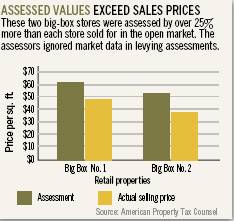
The accompanying chart demonstrates the difference between the assessor's valuation of two big-box stores based on his narrow definition of highest and best use and the actual selling price of those same stores in the open market.

The assessor defined highest and best use as that use being exercised by that specific retailer. That definition led the assessor to value big-box store No. 1 at $62 per sq. ft. and big box store No. 2 at $58 per sq. ft. Actually, store No. 1 sold to another retailer for $49 per sq. ft. and store No. 2 was bought by a different retailer for $38 per sq. ft.By narrowly defining highest and best use, the assessor ignored market data and over assessed the property.

The relevance of a comparable sale's highest and best use was addressed in the case of Newport Center v. City of Jersey City. The New Jersey Tax Court held that a comparable sale should be admissible evidence of value, regardless of its highest and best use, if the claimed comparable sale provides logical, coherent support for an opinion of value.

Many jurisdictions want to effectively reinstate value to the owner, in legal terms called "value-in-use," as the lawful standard for property tax valuations, thereby inflating assessments by eliminating from consideration the sales-comparison approach to value. In the sales comparison approach, sales often provide the best indication of a big box or manufacturing property's market value.

Sales prices reflect loss in value from replacement cost due to obsolescence. That obsolescence generally includes a significant amount of external obsolescence, which represents loss in value caused by some negative influence outside the property.

For example, external obsolescence could result from limited market demand for a big-box store or manufacturing plant built to meet the needs of a specific user. Value may also be adversely influenced by functional obsolescence, a loss in value due to design deficiencies in the structure, such as inadequate ceiling heights, bay spacing or lighting.

Shapiro_Big_Boxes_NREI_Dec07_clip_image002

What's a comparable sale?

Appraisers are taught to only use sales comparables with the same or similar highest and best use to that of the property being appraised. However, even this limitation is too restrictive.

For example, years ago a former automobile assembly plant was offered for sale and eventually sold for demolition and construction of a shopping center. No automobile manufacturer, or for that matter any other manufacturer, was willing to pay more for this property than the developer who bought it to build a shopping center.

Thus, the market spoke and defined the market value of the former automobile plant. In short, if a property is physically similar to the property being valued, but sells for an unusual use, that sale should not necessarily be disregarded as a comparable sale.

The sale of the former automobile assembly plant for use as a shopping center may not be the ideal comparable sale to value industrial property. However, that sale certainly puts a cap, or limit, on the value of a similar industrial facility, subject of course to adjustments for relevant differences such as location or size.

By understanding the issues involved in using comparable sales to achieve market value assessments, taxpayers can successfully appeal property tax assessments when they are based on the misuse of highest and best use.

SHAPIRO_Michael2008Michael Shapiro is a partner in the law firm of Honigman Miller Schwartz and Cohn LLP, the Michigan member of American Property Tax Counsel (APTC). He can be reached at mshapiro@honigman.com.

Continue reading
Jul
11

How to Fight High Property Taxes

"A sale involving a first-generation lease is more a financing operation than a transaction in real estate. In the past, many single-tenant real estate users — often retailers not wanting to tie up capital — financed their real estate through sale-leaseback transactions where they recouped the capital costs by inflating both rent and the corresponding sale price."

By Kieran Jennings, Esq., as published by National Real Estate Investor, Summer Special Edition, July 2007

In a build-to-suit transaction, the value of the property to the user who had it built is greater than the value that property holds for the next user.

For instance, a store built as a McDonald's would not have the same value to a Taco Bell. Although both users are fast-food chains, the layout, design and exterior appearance all work to identify, market or assist the first occupant's business.

The decrease in value from the original user to the subsequent user represents built-in obsolescence. Failure to recognize this obsolescence often subjects first generation owners to excessive property tax assessments.

A triple-net-lease property that was a build-to-suit may be sold to a new owner, even if the original user remains the tenant. In this case, the sale price reflects the value of the tenant's lease. The assets involved in the purchase include both the lease and the real estate.

Because the revenue created by the lease primarily drives the price of the deal, an assessment based on sale price can result in an illegal assessment when it is based on the value of the property to the user.

Fighting back

The first step in reducing improper taxes requires that owners prove to the assessor or the courts that the rent and/or sale represent value to the user, not the market value of the property. The next task is to prove actual market value for the real estate.

A sale involving a first-generation lease is more a financing operation than a transaction in real estate. In the past, many single-tenant real estate users — often retailers not wanting to tie up capital — financed their real estate through sale-leaseback transactions where they recouped the capital costs by inflating both rent and the corresponding sale price. This practice is still prevalent today. The user currently has a relationship with a local developer who will acquire the site and build the property on behalf of the user to suit the user's needs. As with a sale-leaseback transaction, the user will enter into a long-term lease based on the costs of building the property to meet the user's specific needs.

The developer then either retains the property or sells it with the lease in place. Thus, the tenant has outsourced to the developer the financing, site selection, construction and other exterior and interior finishes. The third-party purchaser sees the transaction as essentially buying a bond secured by real estate.

Until the first-generation user vacates the property and the real estate is exposed to the open market, the real estate value has not been tested. Furthermore, because the lease drives the sales price of a net-lease property, only a second generation lease reveals true market value and produces a correct assessment.

Case study makes the point

Data from a recent drug store case illustrates the difference in first- and second generation leases for comparable properties built as national retail drug stores. The average drop of $19 per sq. ft. in rent from the first-generation user to the second generation illustrates the difference between value in use and market value.

The difference is due to obsolescence, a fact first-generation tenants must demonstrate to assessors. Data like that shown in the accompanying chart prove the existence and value of the obsolescence.

JenningsNREI_Fair_Taxation_clip_image002Not only are the rents affected by the first-generation tenant, the capitalization rate is significantly lower than market rates. The net-lease market into which these properties are sold is among the most active and developed in the real estate market, allowing for substantial liquidity, efficient pricing, and tax deferral through 1031 exchanges.
As a result, the capitalization rates have been reduced to exceedingly narrow margins. Therefore, cap rates derived from sales of first-generation property should not be used in determining assessments.

Proving market value

Assessment laws generally provide that property must be valued using market terms and conditions. Therefore, market rents, those paid by tenants in comparable properties, not contract rents, those paid by the net-lease tenant, determine the income attributable to the real estate.

The difference between market rents and contract rents demonstrate the amount of the obsolescence. Furthermore, the differences in sales prices of property from first-generation users to the next generation can also be used to prove obsolescence.

The road to a fair and honest assessment is not easy, but as illustrated in the accompanying chart, the difference between use value and market value can be substantial.


KJennings90J. Kieran Jennings, partner at Siegel Siegel Johnson & Jennings, a law firm with offices in Cleveland and Pittsburgh. The firm is the Ohio and Western Pennsylvania member of the American Property Tax Counsel, the national affiliation of property tax attorneys. He can be reached at kjennings@siegeltax.com.

Continue reading
Jun
13

Industrial Obsolescence

Income approach to value helps reduce assessments on aging manufacturing plants

"Industrial property exists for only one reason —— to manufacture goods and provide an income for the owner. When income declines due to external factors, the market value of the plant drops. Because the trended cost investment method only looks at past investment, it can't account for the current economic reality."

By David Canary, Esq., as published by National Real Estate Investor, June 2007

Have you ever wondered why your local tax assessor has such a high opinion of the value of industrial plants in your area? This is particularly perplexing when global competition drives down the price of finished goods, energy prices skyrocket, the plant gets older and justifying further capital investment becomes difficult because of razor-thin margins.

The assessor thinks industrial properties are worth hundreds of millions of dollars because he uses the trended investment cost method to value the plant. The assessor adds up to value the plant. The assessor adds up the historical costs invested in the plant over the last 30 years, trends that cost to current dollars and depreciates the result based upon the plant's remaining physical life.

This method is a backward-looking valuation approach that does not measure the eternal economic factors that makes industrial property less competitive or even obsolete. The trended investment cost method bears no relationship to the price at which an owner could sell a plant on the open market. Yet, market value is the basis for all property tax assessments.

Industrial property exists for only one reason —— to manufacture goods and provide an income for the owner. When income declines due to external factors, the market value of the plant drops. Because the trended cost investment method only looks at past investment, it can't account for the current economic reality.

A preferred valuation method

The only way for industrial plant owners to obtain fair tax assessments is to argue for the use of the income approach o value their plants —— the same valuation approach investors use to determine the price they will pay for any investment.

Utilizing either a discounted cash flow or a direct capitalization method, the income approach projects the future income stream of the plant, capitalizes or discounts the income by the market rate of return on invested capital, taking into account current and future expected market conditions, as well as the risks and liquidity of the investment.

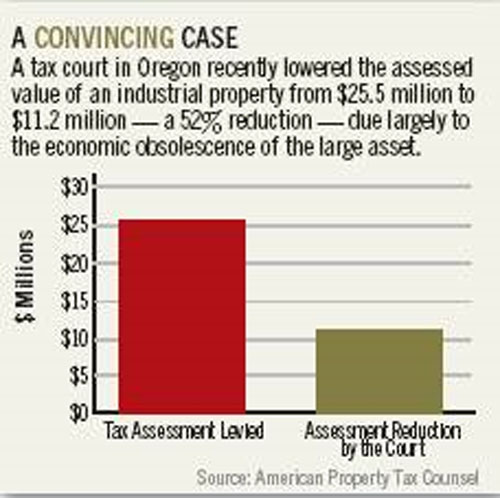
Canary2007_graphThe business value reflects all the factors of production —— land, buildings, machinery and equipment, skilled labor, managerial expertise and goodwill. It is incumbent upon owners to show assessors how to separate the value of the real and personal property from the value of the business for assessment purposes.
Bear in mind that all factors of production fall into one of three categories: working capital, intangible assets and fixed assets. Working capital and intangible assets are non-assessable in most states. The market value of working capital —— which includes cash, receivables, inventories, less current liabilities —— can be easily and accurately determined. Now, only market value of the intangible assets needs to be eliminated to arrive at the value of the fixed assets.

Why exclude intangibles?

Intangible assets include software, good-will, customer lists, contracts, patents and trademarks, assembled workforce and trade secrets. The owner of an industrial property invests in intangible assets one way or another. For example the owner pays wages to skilled workforce and invests in R &D, from which benefits and trade secrets result, in the hope the return will exceed its cost.

Because of economic obsolescence, a struggling industrial plant with low margins enjoys little return on intangible assets. And because the cost of creating and maintaining intangible assets is already reflected in the income stream as costs of doing business, their market value has already been accounted for in the business value. Even if intangible assets do have a value above their cost, the assessor will not complain the resulting valuation is too high.

The devil is in the details. The two components of the income approach —— the income stream and the discount, or capitalization rate —— must be accurately calculated to derive market value. A plant's budget or strategic plan already projects the future income of the plant.

For property tax purposes, it is the expected future debt-free, after-tax cash flow from the industrial plant that is discounted by the weighted average cost of capital. However, this approach must account for the current and expected market risks and liquidity of owning a single, stand-alone plant, not the cost of capital of a Fortune 500 company.

If the future income stream is realistic and the discount or capitalization rate reflects the inherent risks in investing in a single industrial plant, the resulting value will equal the price an investor will pay to own that industrial property.

There remains only the task of convincing assessing authorities that the income approach results in a far better and fairer, estimate of the plant's market value than the antiquated trended investment cost method.

Canary90David Canary has specialized in state and local tax litigation for the past 18 years. He has worked for the past 13 years as an owner in the Portland office of Garvey Schubert Barer and prior to that was an assistant attorney general representing the Oregon Department of Revenue. He has the distinction of trying several of the largest tax cases in Oregon's history. He is the Oregon member of American Property Tax Counsel and an active member of the Association of Oregon Industries' Fiscal Policy Council. He can be reached at dcanary@gsblaw.com.

Continue reading
Mar
15

Don't Get Boxed in By Excessive Taxes

Retail Owners Can Fight Assessors' High Valuations

"All too often assessors get away with over assessing big-box properties owned or occupied by national chains. Assessors see cost of construction, sale-leaseback rents or the capitalized value of the lease and just use the information without looking at the relevancy of those figures to market value."

By Linda Terrill, Esq., as published by National Real Estate Investor, March 2007

All too often assessors get away with over assessing big-box properties owned or occupied by national chains. Assessors see cost of construction, sale-leaseback rents or the capitalized value of the lease and just use the information without looking at the relevancy of those figures to market value.

To bring fairness to the property taxation of big boxes, taxpayers need to understand a number of key issues. The following tax appeal case serves as an example of how taxpayers should approach their property tax assessment, even if they think it appears fair.

TerrillLowesPhoto110

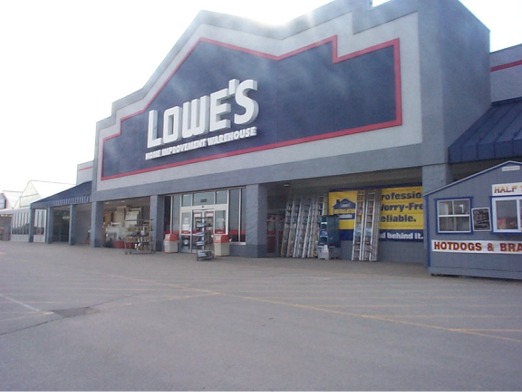
Store Victory: Home improvement retailer Lowe's recently won a property tax appeal case, resulting in a valuation reduction of $2.2 million

In 1997, a developer constructed a large retail warehouse building for a Lowe's. The 133,000 sq. ft. building was built to this user's specifications at a cost in excess of $8 million. A 20-year lease was entered into with a triple-net rental rate of $7.25 per sq. ft. One year prior to the tax appeal, the property was sold for about $9.2 million. The assessor valued the property at $8.5 million, even though it was marketed for $15 million.

At first blush, the facts in this case appear not to warrant a property tax appeal. The assessor valued the property at about what it cost to build, and less than the price at which it sold. This scenario represents the trap that ensnares all too many big-box owners.

However, in this particular case, the taxpayer correctly analyzed the facts, decided an appeal was warranted and successfully litigated a reduction in value to $6.3 million. In litigating the case the assessor and the taxpayer both relied heavily on the market and income approaches to value, but each with a different take.

The market approach

The assessor argued that the capitalized value of the lease was equal to the value of the real estate. Since the value of the lease could be established by the sale, it was crucial for the taxpayer to identify and remove from the sales price any value attributable to the lease in place.

Here the taxpayer had an advantage because the company owned a number of similar properties in different locations. As the market for larger boxes increased, the taxpayer closed the smaller ones and marketed them for sale. There were enough sales to prove two important points. First, the sales were never to another national retailer. Second, these properties always sold for substantially less than their cost to construct.

So, the court had evidence showing the amount the buyer paid for the leased property and what similar buildings sold for without any leases in place. The court ruled that the difference between the selling price of a property with a lease and one without a lease represents the intangible value attributable to the lease in place. The value of the lease isn't the value of the real estate, and only real estate market value is subject to property tax.

The income approach

The battle here was a familiar one. Does the contract rent, the actual rent paid by the lessee, represent market rent? The assessor relied on other build-to-suit and sale-leaseback rental rates. Conversely, the taxpayer argued that these types of rental rates are irrelevant as they are based on financing costs and are not market-driven rates.

The cost to finance construction of a property forms the basis for establishing the lease rental rate, whereas market rates are a function of buyers and sellers agreeing on a rental rate. The taxpayer relied exclusively on marketplace leases as evidence of what one could expect to receive in rent. Again, the taxpayer's argument prevailed.

Scholarly advice

As taxpayers receive their new assessment notices, they need to remember these general principles:

  • For property tax purposes, leased fee and fee simple are different. Don't assume a leased fee sale will also represent the value of the fee simple. If they are the same amount, it's coincidental.
  • Some rents are functions of financing, others are a function of market. Financing rents are prevalent in build-to-suit and sale-leaseback arrangements. If financing rents are equal to market rents, it's coincidental.
  • Remember, the value of the property to the taxpayer is irrelevant. The only relevant issue is what buyers are willing to pay for the property. If the amount a buyer would pay to buy a property equals the taxpayer's investment in it, it's coincidental.

An experienced property tax professional can help with the factual and legal arguments raised here. As a taxpayer, don't let coincidence or other irrelevant issues become the basis for a property's real estate value.

TerrillPhoto90Linda Terrill is a partner in the Leawood, Kansas law firm Neill, Terrill & Embree, the Kansas and Nebraska member of American Property Tax Counsel. She can be reached at lterrill@taxappealfirm.com.

Continue reading

American Property Tax Counsel

Recent Published Property Tax Articles

The Commercial Property Tax Rebellion

The property tax system in the United States, which traces its roots to colonial America, has long been the life blood of local government finance. Used to fund schools, infrastructure and vital municipal services, it is also a system fraught with controversy and mounting calls for reform.

Over the past...

Read more

How to Achieve Fair Valuation of Renewable Energy Facilities

As renewable energy assets become more prevalent in commercial real estate portfolios – especially among industrial and data center users – property owners face a critical challenge: ensuring that intangible assets are not mistakenly included in the taxable value of real and personal property.

Wind farms, solar installations, battery energy storage...

Read more

Taxing Real Estate On Redevelopment Prospects

When a property's current use isn't highest and best, New Jersey jurisdictions can assess and tax based on hypothetical redevelopment.

It's hard to imagine a more dystopian world than one in which governments base real estate tax upon a hypothetical use other than a property's current and actual use. Unfortunately, taxing...

Read more

Member Spotlight

Members

Forgot your password? / Forgot your username?